What is Nursing Foot Care?

The Typical Pedicure
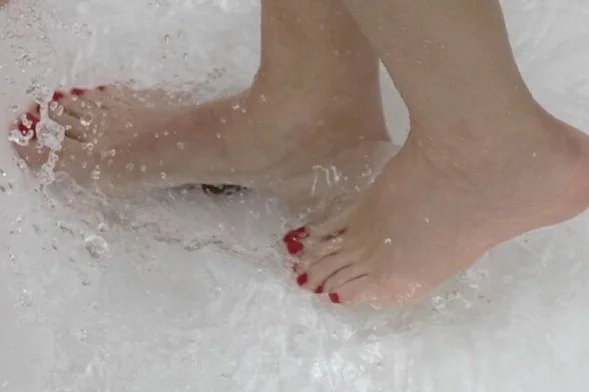
A Pedicure is a nice experience. The nail cuticle and eponychium are pushed back to create a clean aesthetic. The nails are cut straight across and filed, with an option to paint. Calluses will be reduced and moisturized for a more pleasant look and feel. There may be scrubs and salt soaks of sorts with a pleasant smell, and you’ll get a quick rub with lotion. If you find a good spot, they sanitize equipment using approved machinery with high heat.
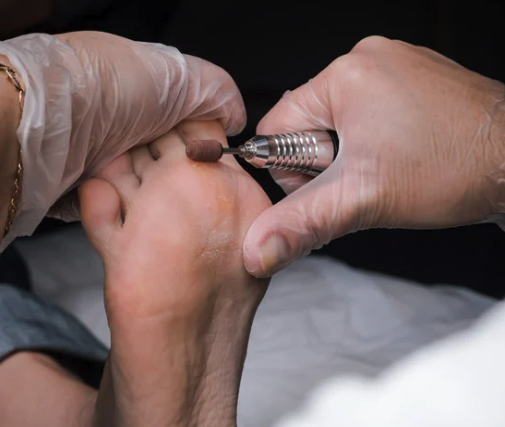
Why is a Nurse Necessary?
For many, the traditional pedicure is not enough, and not safe. Without medical training, a Pedicurist cannot assess tissue, prevent future injury, consider the future of your lower legs and general health, nor create a plan for improvement that considers the wholeness of you. Nail care in Washington state requires disinfection, NOT sterilization. Dark Side Foot Care uses approved chemicals, manual scrubbing, and a Heat Sterilizer to sterilize all sharp (metal and ceramic) equipment that can be reused. An important token to keep in mind, is that just because you don’t see blood, doesn’t mean your skin hasn’t been cut. (This is why it’s essential NOT to shave before foot care!)
For individuals with chronic conditions that impact blood/lymph flow, blood sugar, blood clotting, uric acid, immunological defence, and muscle function, professional evaluation from a licensed health provider is absolutely necessary to prevent longterm injury and identify additional pathologies as time passes. For some chronic conditions, a mild scratch could lead to cellulitis, sepsis (wide-spread blood infection), and amputation within months, even if the scratched is cleansed afterward. Unfortunately, foot soaking has now been found to increase chances of infection/fungus and excess drying and cracking of the skin (for some). Infection control should always be the first priority. Nurses customize care plans based on the individual, as we know which treatments are best for which conditions. There is always a risk of uncover a concern the body has hidden well, but Nurses explain and advise the next steps to care.
FAQ
-
Unfortunately, we cannot ‘cure’ chronic conditions. There are some things that nurses are not permitted or qualified to do. In those cases, we will urge you to visit a foot care provider. In addition to ‘routine foot care’, nurses can help measure for compression therapy, provide or recommend equipment to optimize balance, skin integrity, pressure distribution, and more. Don’t forget to ask- nurses can impart a wealth of resources and knowledge.
-
If you have sensitive feet or need a lot of work done, be sure to schedule your services at least two days before any heavy walking or standing activities. Just like a massage, foot care may provide a huge relief in the moment, but cause some soreness for a short time afterward.
-
No. In the case that someone needs nail reconstruction for an injury, they might receive more resources from their prescriber (DPM, ARNP, MD, DO, etc.). We do offer Nail Repair, for broken/cracked nails. For folks with allergies, it is especially important to consider that many repair systems include chemicals that potentiate severe allergen intolerance.
-
We understand that it might be very tempting to cover a discolored toenail. Dark Side Foot Care does carry anti-fungal vegan polishes (formaldehyde, phthalate, and paraben-free), but they are not for everyone. Inherent to polish is an occlusive factor (blocking air from the nail bed underneath) which could ironically provide the perfect environment for a preexisting fungus to continue or return! Also, if YOU can’t easily see what’s under the nail, how can we monitor if it’s covered?
Additionally, most nail polishes and gels are contributing to a serious allergy issue within the nail field. Want to watch a video about it? Click here
-
Current medical guidelines urge the avoidance of foot soaking, opting instead for cleansing, which still includes moisture and rubbing dirt away. Foot soaking is problematic for tissue over-softening, maceration, high infection risk, and ironically, excessive drying. This does not mean you won’t get a pleasant treatment!
-
We wish! We believe that in this system, any quality nurse would love to take insurance to be more accessible. Unfortunately, in this state nurses are not amongst the short list of care providers who can bill insurance (unless they are an ARNP)! If you really can’t afford it, there are typically services available within your county, which use a different healthcare licensure (not a nurse) for billing.
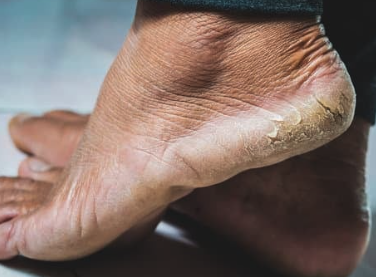
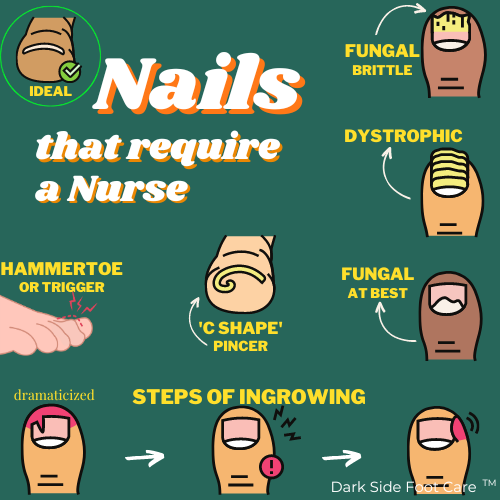
Animated representations of real problems
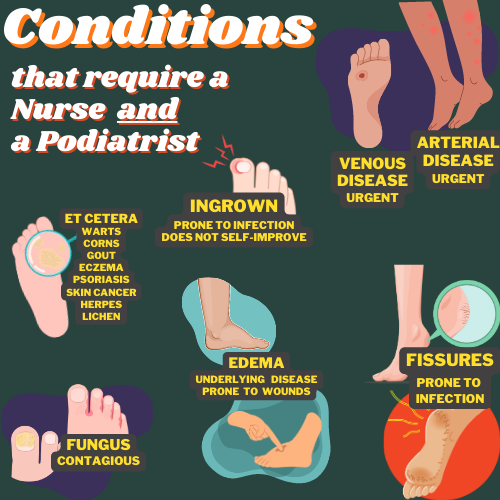

WARNING!
WARNING!
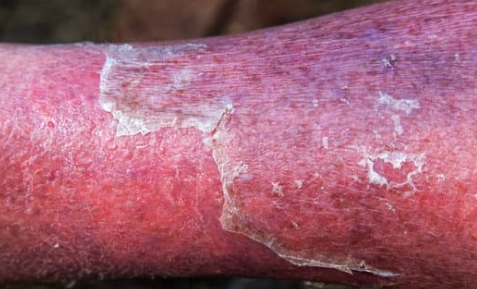
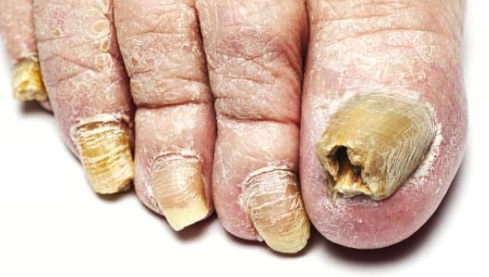
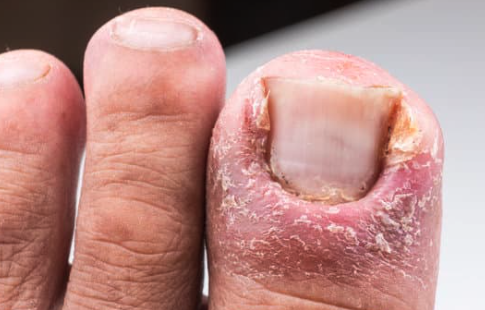
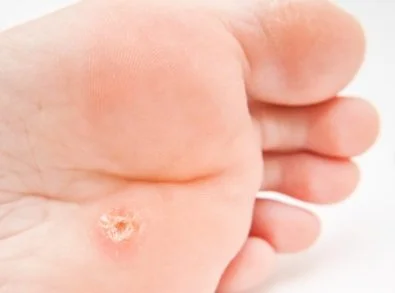
There are pictures below that might be disturbing. Scroll at your own risk, to see some complications of unmonitored, untreated feet (No bleeding sores).
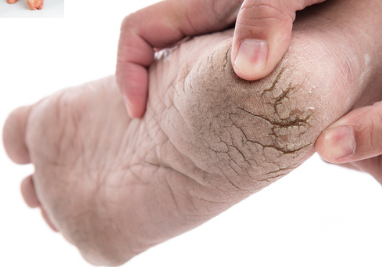
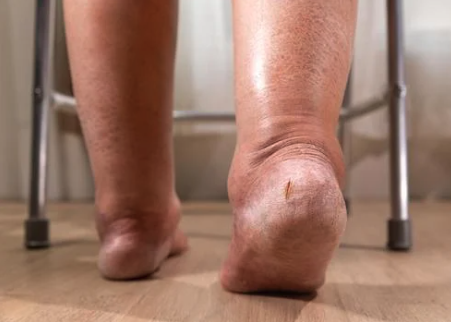
Concerns that must be seen by a Prescriber, and are completely preventable!
(Prescribers have licensure such as: MD, DPM, DO, ARNP, PA)